Construction Industry News


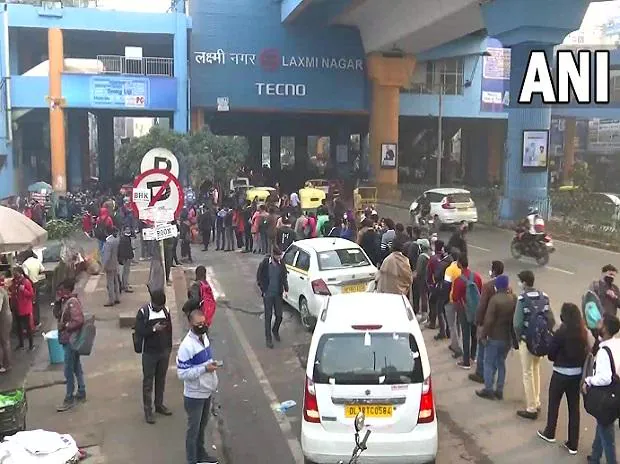
For the second consecutive day on Thursday morning, long lines of commuters were seen outside several Delhi metro stations for the second consecutive day after the authorities imposed new curbs to control the spread of COVID-19 in the city.
Meanwhile, the Delhi Metro authorities, in anticipation of the New Year's Eve commuter gathering, have decided that exiting the Rajiv Chowk metro station after 9pm on that day will no longer be permitted.
Every year, revelers gather at Connaught Place, the heart of New Delhi, next to the metro station, to ring in the New Year.
However, with new Covid restrictions and a curfew in effect from 11pm in Delhi amid fears of the Omicron variant of the coronavirus, the crowd is likely to be small.
“In order to reduce the overcrowding on New Year's Eve, it is no longer allowed to exit the Rajiv Chowk metro station from 9 PM. However, passengers are allowed to enter until the departure of the last train from the station. Commuters are requested to plan their journey accordingly," the DMRC said in a statement on Thursday.
Yellow warning action was launched by authorities on Tuesday, which also means that subway trains run with only 50 percent seating capacity and no provision for commuters, given the increasing cases of COVID-19 in Delhi.
Since the new restrictions came into effect, queues in the morning when metro services are used by a large number of office visitors have again been seen longer at some stations, officials said, adding they were doing their best to manage the situation to ensure compliance. to guarantee the Covid standards.
Long lines of commuters lined up outside the stations of Laxmi Nagar, Akshardham, among others, on Wednesday. Many had also taken to Facebook and Twitter to share photos of such queues outside stations.
Sources said that since offices are open and not many people can afford their own car or other means of transport every day, they are required to use public transport, and if the 50 percent seating capacity rule is in place, such queues will be seen.
Delhi Metro had said in a statement on Wednesday that as part of the tightened measures to contain the spread of COVID-19, "15 flying squadrons were deployed over the Delhi Metro network" to ensure strict Covid safety protocols. complied with by passengers on trains and on DMRC premises.
The frequency of checking rides will also be increased to ensure strict adherence to the guidelines, and violators will also be punished on the spot, a senior official had said.
India saw the highest single-day rise of 180 cases of the Omicron variant of the coronavirus, bringing the total number of such infections in the country to 961, according to Union health ministry data updated Thursday.
Delhi registered the maximum number of 263 cases, followed by Maharashtra at 252, Gujarat 97, Rajasthan 69, Kerala 65 and Telangana 62.
The national capital had registered 923 new Covid cases on Wednesday, the highest daily increase since May 30, as the positivity rate again crossed the 1 percent (1.29 percent) mark.