
Construction Industry News


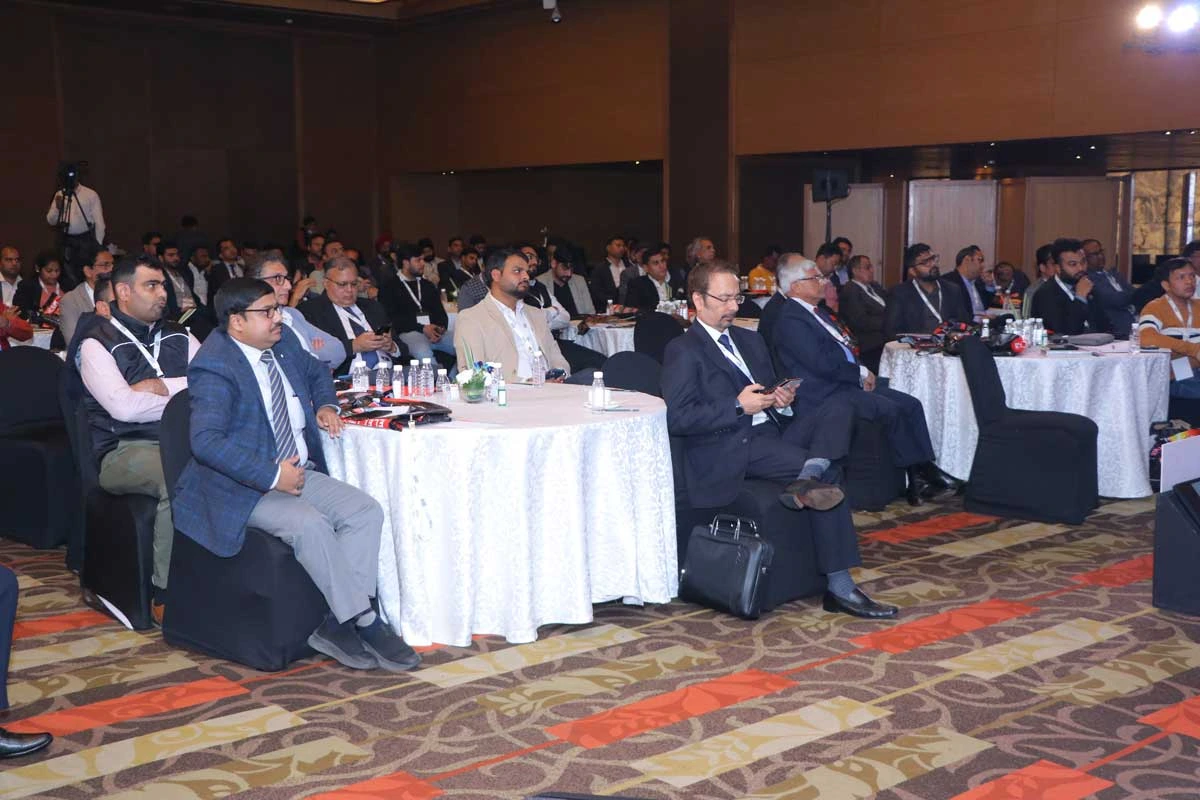
In 2018, it was estimated that every ton of steel produced emitted an average of 1.85 tons of carbon dioxide, equivalent to about 8% of global carbon dioxide emissions. Today, all steel players around the world, along with Indian counterparts, are increasingly facing the decarbonization challenge.
In a steely affair between the steel specialists across the country organized by FIRST Construction Council, the 6th edition of 'MAKE IN STEEL' Conference & Awards 2023, in collaboration with Construction World & Infrastructure Today magazines, was held on 10 February 2023 in New Delhi with the theme 'Decarbonisation v/s Growth'. The dynamic participants cautiously explored opportunities to benefit the use and quality of steel in Indian conditions.
Terrence Busuttil, Director ConstructSteel, World Steel Association (WorldSteel) shared a global perspective on steel with the public. In his keynote remarks, he claimed: "We expect the steel industry to grow by about 2%, as the growth of urbanization and the growing pace of domestic products around the world are generating an increase in construction. The additional factor post-COVID is related to the energy transition, as we move away from fossil fuels to renewable energy sources used for construction.If we look at buildings that are driven by urbanization and population, the infrastructure is being further developed, and this is a megatrend that we are seeing in construction today. This allows the steel industry to position itself in a market that grows over time. However, the share of the steel market in construction is not high. We're escalating it by about 25%, and it's generally very low in all markets."
Further, he added: "We need to treat the construction industry as segments and then focus on those segments. Bridges, low-rise buildings, high-rise buildings, etc. are all different segments in the field of construction, but they cannot be treated in the same way from a market development perspective. They need to be treated differently and use different tools to increase their market share."
He stated: "By 2050, it is unlikely to achieve net zero targets. With the currently known technology and the arrival of expected technologies, we will still face emissions of around 25 million tonnes, even by 2070". He further claimed that "man-made emissions must be equal to man-made removals of emissions to achieve net zero. We should opt for nature-based solutions such as planting additional trees or implement technology-based solutions, such as carbon capture and storage. But right now, we don't know when that will be implemented."
He went on to add some key points with the audience, stating: "For planting more trees, there will be a requirement of almost 2.5% forest land for the steel sector to reach net-zero. We will need 2 million hectares of land for planting trees. But even with these challenges in our hands, we can't afford to stop the growth of the sector."
He shed light on the current predicament of freight wagons, saying: "For freight wagons, steel is the mainstay for their production. We are now moving to areas with special types of wagons for the transport of special goods that require special steel. In such a scenario, we will need the private sector to come up with the technology to provide us with the wagons that are needed.Currently, the current production capacity of wagons in India is 30,000 wagons which are unevenly distributed among 15 producers, but they all depend on the cast iron wheelsets manufactured by Rail Wheel Factory in Bangalore and Rail Wheel Plant, Bela in Bihar, both of which have a limited capacity of around 20,000 wheelsets per year, and this is insufficient to meet the current demand."
Concluding, he said: "Indian Railways will probably soon issue the tender where private industry can set up a wheelset factory and give Railways a guarantee to buy back capacity for at least the next 20 years."
FIRST Construction Council (FCC) unveiled an extensive 'TMT Rebar Report 2023' during the conference. It is part of the many infrastructure research studies and reports compiled by FCC to help the industries with an update on the respective materials and products. It acts as a source for all the information needs of the construction companies and the stakeholders in the industry, the catalyst for adopting best practices, the torchbearer for all policy initiatives needed to increase the importance and well-being of the industry, and thus to be the unified voice of the industry.

 649
649
 900
900

 169
300
169
300
 4689
9399
4689
9399
 692
1599
692
1599
 85791
137266
85791
137266
 43813
0
43813
0
 22500
22600
22500
22600
 7315
11705
7315
11705
 99
0
99
0
 899
1650
899
1650
 1149
1999
1149
1999
 4449
8899
4449
8899
 949
1155
949
1155