Construction Industry News


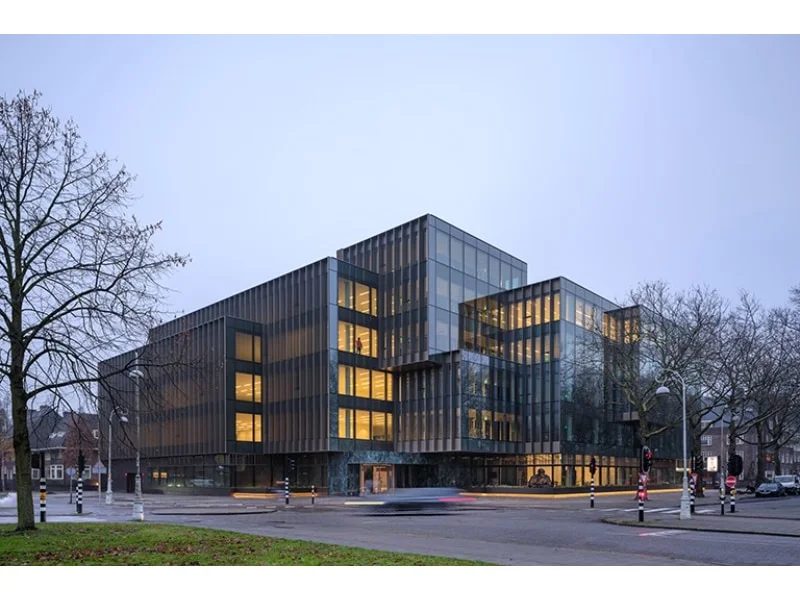
Apollolaan 171, Amsterdam's newest high-end office building, is open to the public. The architecture of the office, designed by OMA / David Gianotten on behalf of the Kroonenberg Group, is characterized by transparency and tactility and responds to the Berlage architecture of the early 20th century in the area.
Lesley Bamberger, CEO of the Kroonenberg Group: “In this prominent Apollolaan location, we have co-created a beautiful office building that has a great impact on the entire neighbourhood. The design adapts to the environment and guarantees a very natural integration. “We are proud of this wonderful asset for the city.
David Gianotten, Managing Partner of OMA – Architect: “Around Apollolaan 171 there is a mix of boutique office buildings, houses and luxury hotels. Our primary intention is to connect the new architecture to the vibrant neighborhood through form and materiality, unlike the original JP Morgan building, which was more isolated due to the bank's security needs. In our design, the interlocking glass volumes along Apollolaan 171 give the building a welcoming character, while the brick façade on the residential Titiaanstraat evokes the historic architecture of Berlage.
Apollolaan is a prominent green avenue in the south of Amsterdam; a mixed neighborhood characterized by historic city villas and modern buildings housing homes and offices. The Hilton Hotel designed by Dutch modernist architect H.A. Maaskant is an icon in the area. The JP Morgan building, with a largely opaque façade, was built in the 1980s on a corner of Apollolaan. It followed Wim Quist's competition-winning design, which beat other projects, including OMA's. As the building transitioned from JP Morgan workspace to rental offices in the following years, the original design could no longer meet the new functional needs. Apollolaan 171 has been developed as a contemporary office that offers a more open work environment, integrated with the surroundings.
The shape of the new five-story building is a literal translation of the original envelope of the JP Morgan bank. The contrasting materiality gives the architecture a double character. One side of Apollolaan 171 is defined by glass volumes organized with reference to a 3D Japanese puzzle. The volumes are sized in such a way that they match the scale of the nearby buildings, while the glass brings in plenty of light and the greenery of the Apollolaan extends into the offices. The main finishing material for the lobby and main circulation core is green marble, in keeping with the lush greenery along Apollolaan. On the Titiaanstraat side, the building is stepped and clad in custom-designed interlocking bricks, evoking the area's historic homes through scale, color and feel. The shape of the building has given rise to several terraces, including a roof garden for use by tenants.