Construction Industry News


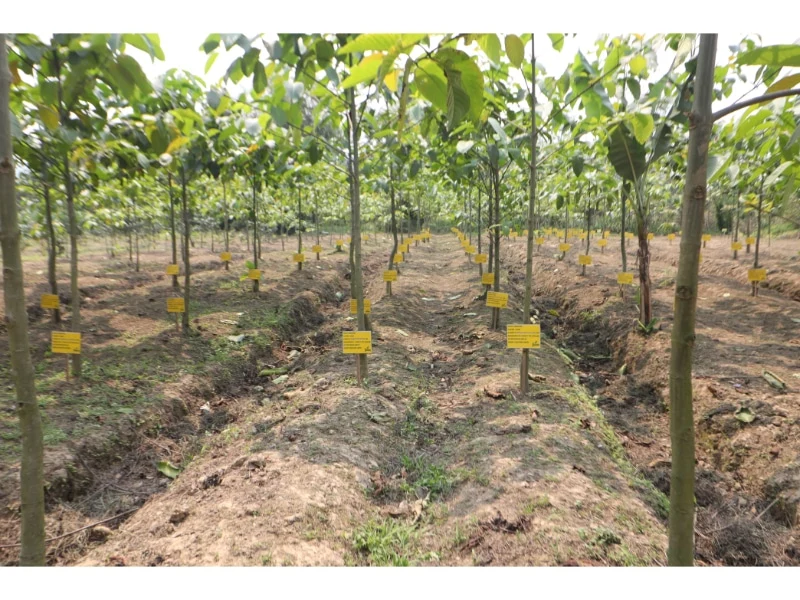
Greenply Industries launched the Green-Rise initiative as part of its green planting and restoration drive at its Tizit facility in Nagaland, with the aim of contributing positively to the environment while encouraging self-reliance within communities. As part of this project, a sapling is planted on behalf of an architect associated with the wood panel industry.
The planting project demonstrates the company's commitment to sustainable practices, in particular by adopting a forest management council. (FSC) Forest Management Model. It is worth mentioning here that Greenply has achieved FSC – FM (Forest Management) certification from the Forest Stewardship Council (FSC) for its sustainable plantation unit located in Tizit, Nagaland and is the first company to successfully obtain the certification in the indoor infrastructure sector. in India. This certification provides assurance to consumers that the products they purchase come from a responsible/sustainable source, protects indigenous rights to use the forest, and helps combat deforestation, forest degradation and illegal logging in certified areas.
The initial phase of the Green Rise project included Planting of more than 780 saplings in honor of architects from Odisha, Uttar Pradesh, Maharashtra and Tamil Nadu. Later, architects from Bihar, West Bengal, Jharkhand, Madhya Pradesh and various parts of India will be honored. Each tree planted under this scheme is tagged with a bar code containing relevant information such as architect's name and address, date and time of planting, tree species and contact number. These trees will mature within 7 to 8 years, and once harvested, the proceeds will go to charities or schools on behalf of the architects.
Currently, our plantations are accumulated across India and include 52,983 acres of land used in this mission with more than 41.57 million saplings covering the area. The company's goal is to plant 50 million seedlings by 2025. To implement this initiative, Greenply collaborated with the state government and local communities and received enthusiastic participation from local residents.
The company's investments in the farms are to help them promote a plant-based growth model Sustainability. The model is based on a long-term perspective of continuous supply of raw materials for its products and guides the comprehensive development of the farmer community. Greenply is also developing a farm around its upcoming MDF unit under WOS in Vadodara, very much in line with its strategy to invest in sustainable development in the basin of all its manufacturing facilities.
Greenply is also one of the first In India, which has promoted the use of okumi wood, a natural wood extracted under a sustainable forest management plan. The company is also collaborating with several government research organizations in India to upgrade latest technologies for its farm activities for the benefit of farmers.
Providing renewable energy is one of the key focus areas of the company. Greenply carries out activities to reduce emissions and move towards renewable energy generation. Rooftop solar panels are installed at all manufacturing facilities to generate green energy.
The company is the first in the wood and panel industry to offer a range of zero emission (E-0) products keeping in mind the interest of consumers' health by ensuring that indoor air quality is maintained by reducing formaldehyde emissions to negligible or zero levels. EO's innovation has reached over a million homes, and Greenply continues to raise awareness among stakeholders through multiple touchpoints. Not only is the EO Collection synonymous with strength and durability, but it is also internationally certified by the California Air Resources Board (CARB) to meet Class E-0 and low-VOC emissions.
Greenply also promoted the cause of reducing plastic footprint across India. The company recently undertook an awareness campaign to discourage the production, sale and use of plastic Tiranga (the national flag of India). Greenply has also committed to eliminating the use of single-use plastics and eliminating them at a regulatory level.