Construction Industry News


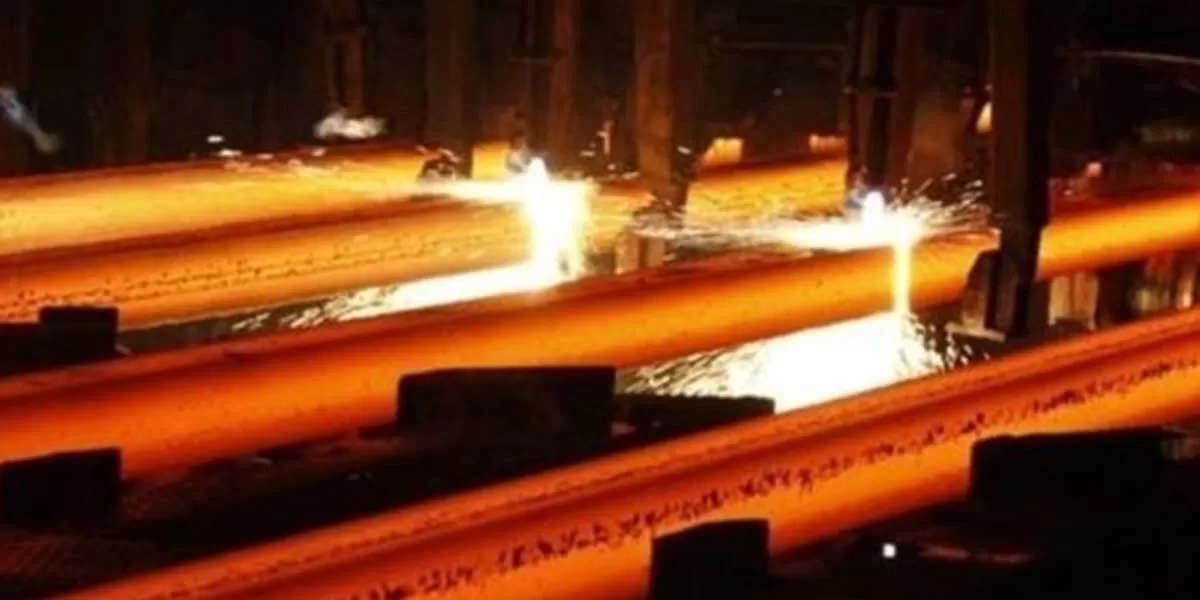
According to a report by Nomura, India’s steel industry is set to grow significantly in the coming years. There are plans to expand crude steel capacity by around 23 million tonnes (MT) between FY2024 and FY2027.
According to the report, the industry reflects a compound annual growth rate (CAGR) of 4.8 percent. The report noted that this growth target is in line with the long-term average growth of the industry from FY15 to FY24.
Despite this significant capacity expansion, experts believe that the Indian steel sector is set to enter a favorable phase.
“We estimate that the Indian steel industry will add around 23 million tonnes of crude steel capacity in FY 2024-27, with an implied CAGR of 4.8%, which is in line with the long-term average of FY 2015-2024,” the report said.
The report noted that steel giants JSW, JSPL, Tata Steel and ArcelorMittal & Nippon Steel would account for nearly 87 percent of the ongoing capacity addition. Although the report noted that significant capacity will come on stream over the next three years.
As per the report, JSW Steel will add 7MT by FY28F with a CAGR of 5 percent over FY24-28F. While JSPL will add 6.3MT by FY27F with a CAGR of 18 percent over FY24-27F.
The report also suggested that even under a conservative assumption of 6 per cent CAGR in steel demand through FY27 (compared to 7 per cent in the past five years), capacity additions are still expected to lag demand growth during this period. This could lead to an improvement in the domestic demand-supply balance, reducing the need for steel companies to rely on exports for volume growth.
“Improving domestic supply-demand fundamentals in fiscal 2027 could signal reduced reliance on exports for volume growth,” the report said.
According to analysts, India’s steel companies are well-positioned within the global metals sector. These companies benefit from operating at the lower end of the global cost curve, primarily due to lower labor costs. In addition, India’s iron ore costs remain competitive compared to other countries, even for non-integrated steelmakers.
The future expansion of the Indian steel industry is expected to be largely driven by brownfield projects, which involve expanding or upgrading existing facilities. Strong domestic demand is another factor that could help reduce the industry’s dependence on exports.
“We believe Indian steel companies are among the best positioned producers in the world,” the report said.

 197
197
 249
249

 199
599
199
599
 2839
5699
2839
5699
 759
1699
759
1699
 11823
23599
11823
23599
 3949
7899
3949
7899
 5348
10695
5348
10695
 18769
37499
18769
37499
![P.A.Traditional Handwork Golden Border Jardosi/Patch Work & Moti Toran for Main Entrance Door Hanging Toranam/Bandarwal.[36 Inch]](https://m.media-amazon.com/images/I/41RcPwhmTOL._SY300_SX300_QL70_FMwebp_.jpg "P.A.Traditional Handwork Golden Border Jardosi/Patch Work & Moti Toran for Main Entrance Door Hanging Toranam/Bandarwal.[36 Inch]") 585
1000
585
1000
 4649
9299
4649
9299

 7022
10999
7022
10999
 299
499
299
499
 4789
9599
4789
9599
 3507
5612
3507
5612
 27919
83754
27919
83754